Key Takeaways
Green app development focuses on reducing energy consumption, data usage, and server load through optimized code, lightweight UI/UX, and efficient infrastructure.
Key features of green apps include energy-efficient architecture, minimized background activity, optimized media handling, offline functionality, and performance monitoring.
Building a green app typically costs between $20,000 and $120,000+, depending on app complexity, sustainability level, and infrastructure choices.
Real-world apps like Yayzy, PaperKarma, Ecosia, and Too Good To Go prove that sustainable apps can scale and succeed commercially.
Common challenges such as performance balance, higher initial effort, and measurement of sustainability can be overcome with proper planning and tools.
Following a step-by-step green app development approach ensures long-term efficiency, cost savings, compliance, and environmental impact.
As digital technology continues to grow, its impact on the environment is becoming impossible to ignore. Mobile apps consume energy, data, and server resources every second, contributing to the global digital carbon footprint. This is why green app development is gaining importance across industries.
As environmentalist David Attenborough reminds us, “No one will protect what they don’t care about.” Building apps responsibly today can shape a more sustainable tomorrow.
When businesses choose eco-friendly app development, they take a step toward caring for both users and the planet. This green app development guide explains how sustainable app development works, why it matters, and how businesses can adopt eco-friendly practices step by step to build future-ready digital products.
The digital world is often thought of as “clean” because it’s virtual, but it has a significant environmental footprint, especially as apps and online services scale.
The demand for digital services leads to energy use, carbon emissions, and resource strain that are seldom discussed.
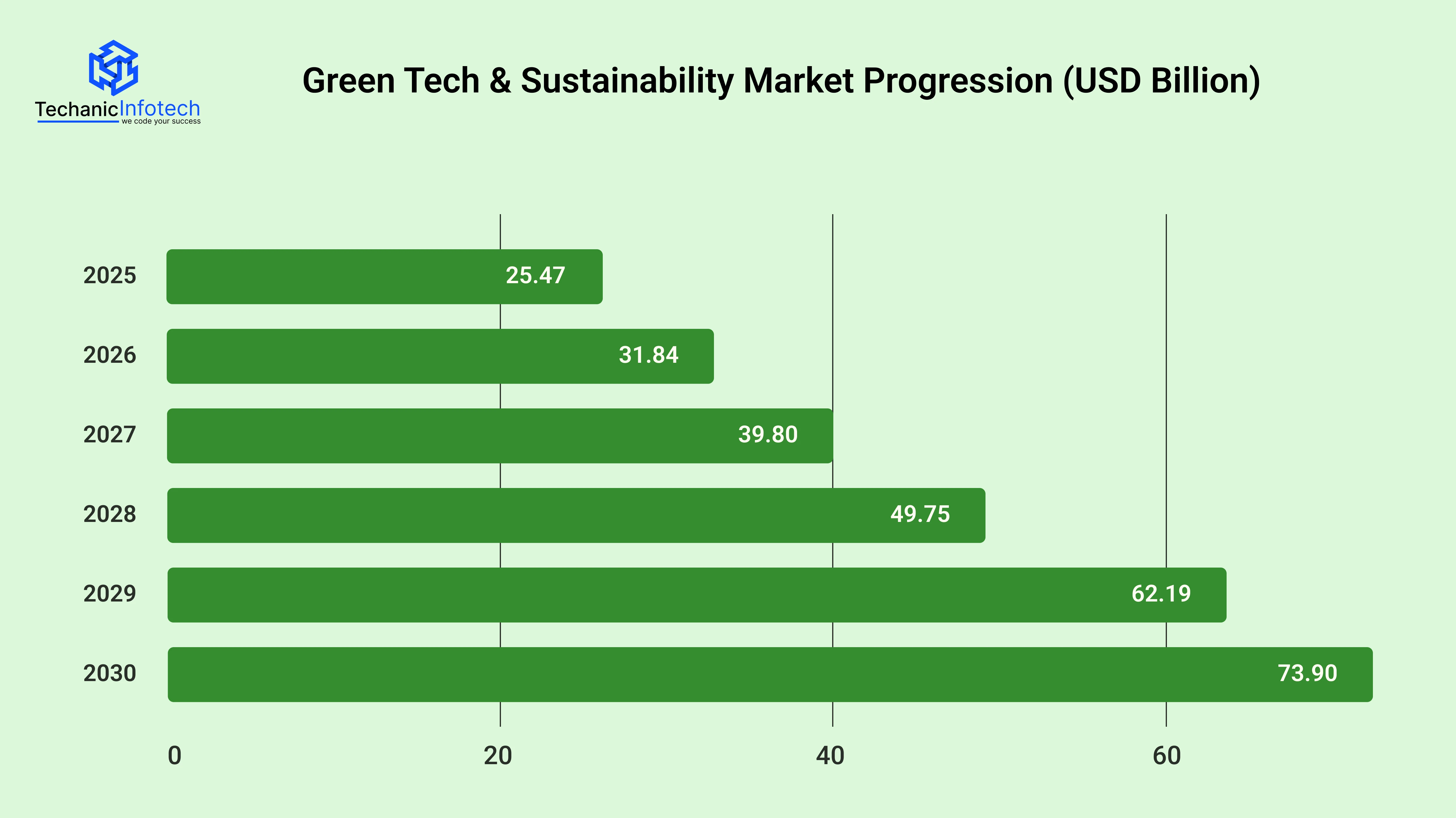
Digital technology, covering everything from apps to data centers, accounts for around 3.5–4% of global greenhouse gas emissions, a level similar to or even exceeding some major physical industries.
These emissions come from energy-hungry data transfers, server farms, and end-user devices that must be powered continuously to support app services. Shift Project
Mobile applications have an environmental impact too. Studies estimate that mobile apps contribute at least 6% of digital CO₂ emissions, driven by background activity, data tracking, and inefficient code. Greenspector
Every online action, from streaming videos to browsing, consumes energy. For example, the average internet usage emits about 400g of CO₂ per person annually, and this figure is increasing with higher video usage and data transfer volumes. Shift Browser
Data centers, which power apps and digital services, use large amounts of electricity. In 2024, they accounted for a significant share of global power consumption, and this is projected to grow sharply as new technologies like AI become widespread.
Research indicates that the digital sector’s energy use is rising rapidly, with ICT energy demand increasing by roughly 9% per year. Without intervention, this growth could amplify digital emissions and outweigh the efficiency benefits technology can offer. The Shift Project
Popular internet services and apps contribute to emissions simply through user behavior. The energy cost of streaming high-resolution media, continuous server use, and persistent connectivity all add up to a noticeable environmental burden. climateimpact.com
Green app development and traditional app development differ in how they approach performance, resource usage, and long-term impact. While both aim to deliver functional applications, their priorities and outcomes are very different.
Green app development focuses on building applications that are energy-efficient, resource-optimized, and environmentally responsible.
The goal is to reduce digital carbon emissions while maintaining strong performance and user experience. These apps are designed with lightweight code, minimal background processes, optimized data usage, and sustainable cloud infrastructure.
In green app development, developers carefully choose technologies, architectures, and design patterns that consume less battery power and server energy. Features are built only when necessary, and apps avoid excessive animations, heavy media loading, and constant data syncing. This approach not only helps the environment but also improves app speed, reduces battery drain, and enhances user satisfaction.
Green apps are future-ready and align with global sustainability goals, making them ideal for businesses that want long-term value, better performance, and responsible digital growth.
Traditional app development focuses mainly on functionality, speed to market, and feature richness, often without considering environmental impact. These apps may include heavy graphics, constant background activity, frequent API calls, and inefficient code structures that increase energy consumption.
While traditional apps can deliver strong features, they often drain device batteries faster, require more server resources, and generate higher data traffic. Over time, this leads to increased operational costs and a larger digital carbon footprint. Performance issues may also arise on low-end devices or in low-connectivity regions.
Traditional mobile app development works well for short-term goals but can become expensive and unsustainable as user numbers grow.
|
Aspect |
Green App Development |
Traditional App Development |
|
Core Focus |
Sustainability, efficiency, performance |
Features and fast delivery |
|
Energy Consumption |
Optimized to use minimal energy |
Higher energy usage |
|
Code Structure |
Clean, lightweight, optimized |
Often bulky and resource-heavy |
|
Battery Usage |
Low battery drain |
Faster battery drain |
|
Data Usage |
Reduced and optimized data transfer |
High and frequent data usage |
|
Background Processes |
Minimal background activity |
Continuous background operations |
|
Server & Cloud Usage |
Uses energy-efficient, green cloud services |
Uses standard cloud infrastructure |
|
Environmental Impact |
Low digital carbon footprint |
Higher carbon footprint |
|
App Performance |
Faster load time and smoother experience |
May slow down on low-end devices |
|
Scalability |
Cost-efficient and sustainable at scale |
Higher operational costs as scale grows |
|
User Experience |
Cleaner UI, better responsiveness |
Can feel heavy and cluttered |
|
Long-Term Cost |
Lower maintenance and energy costs |
Higher infrastructure and maintenance costs |
|
Future Readiness |
Aligned with sustainability regulations |
May require rework in the future |
Green app development focuses on building applications that are efficient, responsible, and future-ready.
Below are the most important features that define a truly sustainable and eco-friendly app.
Green apps are built with clean, optimized code that reduces unnecessary processing. Efficient algorithms and minimal loops help lower CPU usage, which directly reduces energy consumption on user devices.
Green apps minimize data transfers by caching content, compressing files, and avoiding frequent API calls. This reduces server load and network energy usage while improving app speed.
Background processes are kept to a minimum. Green apps avoid constant syncing, location
tracking, and unnecessary push notifications, helping save battery and system resources.
Simple, clean user interfaces with fewer animations and graphics help reduce power usage. Lightweight ui/ux design improves load time and performs better on low-end devices.
Green apps are designed to consume less battery by optimizing refresh rates, background tasks, and sensor usage. This leads to longer battery life and better user satisfaction.
Images, videos, and other media files are optimized using compression and adaptive loading. Content loads only when needed, reducing bandwidth and energy waste.
Green app development uses energy-efficient cloud infrastructure and scalable servers. Efficient backend operations help reduce electricity usage and carbon emissions.
Apps monitor and manage memory, CPU, and network usage carefully. This prevents overuse of device and server resources and improves overall performance.
Green apps support offline access wherever possible. This reduces repeated data requests and lowers energy usage caused by continuous connectivity.
Green apps are built to scale without excessive resource consumption. Modular architecture allows future updates without rebuilding the entire system.
Continuous monitoring helps identify energy-heavy features. Regular optimization ensures the app stays efficient as user traffic grows.
Green apps follow eco-friendly development practices and align with global sustainability goals, making them future-ready and regulation-friendly.
Building an eco-friendly mobile application is no longer just a responsible choice, it’s a smart business decision.
As digital usage grows, businesses that adopt eco-friendly app development gain long-term advantages in performance, cost, and user trust. Below are the key benefits of choosing a green approach.
Eco-friendly apps are designed to consume less energy by using optimized code, reduced background activity, and efficient data handling.
When businesses develop a green app, they directly reduce battery usage on devices and energy demand on servers. This lowers the app’s overall digital carbon footprint and supports environmental sustainability goals.
Green apps are lightweight by design. Optimized resources, compressed media, and minimal API calls result in faster loading and smoother performance. Green application development improves responsiveness, especially on low-end devices and slow networks, enhancing overall user experience.
One major benefit of building a sustainable app is lower battery drain. Eco-friendly apps avoid unnecessary background processes, excessive notifications, and constant location tracking. This leads to longer battery life, which users highly value and often reward with better ratings and reviews.
Sustainable apps use optimized servers and energy-efficient cloud infrastructure. Over time, this significantly reduces hosting, bandwidth, and maintenance costs. Businesses investing in green app development services benefit from scalable systems that grow without excessive resource consumption.
Users are becoming more environmentally conscious. Companies that make a green app position themselves as responsible and future-focused. This builds brand credibility, strengthens customer loyalty, and helps businesses stand out in competitive markets.
Sustainability regulations and environmental standards are becoming stricter worldwide. Green app development prepares businesses for future compliance while avoiding costly redesigns. Following a development guide ensures apps remain adaptable, compliant, and aligned with global sustainability initiatives.
Building an eco-friendly application requires a thoughtful approach at every stage of development.
Unlike traditional apps, green apps focus on performance, efficiency, and sustainability from day one. This step-by-step guide to green app development explains how businesses can design, build, and scale applications while reducing their digital carbon footprint.
The first step to creating a green app is defining what sustainability means for your project. This includes identifying goals such as reducing energy consumption, minimizing data usage, improving battery efficiency, or lowering server load.
At this stage, you should also define your app’s purpose and target audience. Clear goals help teams make the right decisions throughout the development lifecycle. This foundation is essential for successful green app development and avoids unnecessary features that increase resource usage.
|
Planning Element |
Description |
|
Energy Reduction Goals |
Define targets to lower battery and server energy usage |
|
Resource Optimization Scope |
Identify areas to reduce CPU, memory, and data consumption |
|
Environmental Impact Metrics |
Set measurable KPIs for sustainability performance |
|
Target User & Usage Patterns |
Understand how users interact to avoid over-engineering |
|
Feature Necessity Evaluation |
Include only features that add real value |
|
App Purpose Alignment |
Ensure sustainability aligns with business objectives |
|
Long-Term Efficiency Vision |
Plan efficiency beyond initial launch |
|
Compliance Considerations |
Account for sustainability standards early |
Selecting the right technologies plays a major role in green application development. Lightweight frameworks, efficient programming languages, and scalable architectures help reduce processing power and energy consumption.
Cross-platform frameworks can reduce duplication of resources, while modern backend technologies support efficient data handling. Choosing the right mobile tech stack early supports long-term sustainable app development and prevents performance bottlenecks.
|
Technology Element |
Description |
|
Lightweight Frameworks |
Reduce app size and processing load for better energy efficiency |
|
Cross-Platform Tools |
Use a single codebase to reduce resource usage and development overhead |
|
Efficient Programming Languages |
Consume less CPU and memory during app execution |
|
Optimized Databases |
Handle data storage and retrieval with minimal energy usage |
|
Scalable Backend Architecture |
Allocates resources only when needed, avoiding energy waste |
|
Cloud-Based Infrastructure |
Enables efficient server usage and reduces physical resource dependency |
|
API Optimization |
Limits unnecessary network calls and data transfer |
|
Content Delivery Networks (CDNs) |
Deliver content faster with reduced server load and latency |
UI/UX design has a direct impact on energy usage. Simple layouts, minimal animations, and clean navigation reduce processing load on devices. Avoiding heavy graphics and unnecessary transitions helps apps run smoothly and consume less power.
When you build a sustainable app, the design should focus on usability and efficiency rather than visual complexity. Lightweight design improves load speed and works better across devices and network conditions.
|
UI/UX Element |
Description |
|
Minimalist Layout |
Reduces rendering load and improves app performance |
|
Limited Animations |
Avoids excessive GPU and battery consumption |
|
Optimized Images & Icons |
Uses compressed assets to lower data and energy usage |
|
Simple Navigation Flow |
Reduces screen transitions and processing effort |
|
Dark Mode Support |
Helps reduce battery usage on OLED screens |
|
Adaptive Screen Loading |
Loads only required content instead of full screens |
|
Responsive Design |
Ensures smooth performance across devices and screen sizes |
|
Accessibility-Friendly Design |
Improves usability without adding heavy UI components |
Efficient code is the backbone of green app development. Developers should follow clean coding practices, reduce redundant logic, and optimize algorithms to minimize CPU and memory usage.
Modular architecture helps load only required components instead of the entire app. This step is critical when businesses develop a green app that performs well without draining device resources.
|
Code/Architecture Element |
Description |
|
Clean Code Practices |
Reduces unnecessary processing and improves maintainability |
|
Modular Architecture |
Loads only required components instead of the entire app |
|
Efficient Algorithms |
Minimize CPU usage and execution time |
|
Memory Management |
Prevents memory leaks and reduces resource waste |
|
Lazy Loading |
Loads features only when needed to save energy |
|
Code Reusability |
Avoids duplicate logic and reduces app size |
Data transfer consumes significant energy. Green apps minimize network calls by caching data, compressing files, and syncing only when necessary.
When you make a green app, offline functionality should be considered wherever possible. Reducing unnecessary API requests not only saves energy but also improves app performance and reliability.
|
Optimization Element |
Description |
|
Data Caching |
Stores frequently used data locally to reduce server calls |
|
API Call Optimization |
Limits unnecessary or repeated network requests |
|
File Compression |
Reduces the size of images, videos, and assets |
|
Offline Mode Support |
Allows app usage without constant internet access |
|
Batch Data Syncing |
Combines multiple requests into a single operation |
|
Adaptive Data Loading |
Loads content based on network strength |
|
Smart Sync Scheduling |
Syncs data only when required |
|
Reduced Polling |
Avoids continuous data fetching in the background |
Background tasks are a major cause of battery drain. Green apps limit background syncing, location tracking, and push notifications to only what’s essential.
Smart scheduling and event-based triggers help reduce constant background activity. This step ensures your app remains efficient even with long usage periods, which is a key principle of sustainable app development.
|
Optimization Element |
Description |
|
Background Task Scheduling |
Runs background jobs only at fixed, necessary intervals |
|
Event-Based Triggers |
Activates tasks only when specific actions occur |
|
Limited Push Notifications |
Sends alerts only when they add real user value |
|
Location Tracking Control |
Uses GPS only when required, not continuously |
|
Sensor Usage Optimization |
Reduces overuse of device sensors |
|
Battery-Aware Operations |
Adjusts app behavior based on battery level |
|
App Sleep Mode |
Pauses non-essential activities when idle |
|
OS Power Management Compliance |
Follows system-level energy-saving guidelines |
Backend infrastructure has a huge impact on the overall green app development process. Energy-efficient cloud providers, optimized databases, and scalable servers reduce electricity consumption and emissions.
Choosing green hosting solutions and auto-scaling servers helps match resource usage with demand. This approach is essential when you create an on-demand green app that must handle traffic efficiently.
|
Infrastructure Element |
Description |
|
Green Cloud Providers |
Use data centers powered by renewable energy |
|
Auto-Scaling Servers |
Adjust resources dynamically to avoid overuse |
|
Serverless Architecture |
Runs code only when needed, saving energy |
|
Efficient Databases |
Reduces compute load during data operations |
|
Load Balancing |
Distributes traffic evenly to prevent server overload |
|
CDN Integration |
Serves content from nearby locations with less energy |
|
Optimized Hosting Regions |
Reduces latency and energy consumption |
|
Resource Monitoring Tools |
Track and optimize server energy usage |
Continuous monitoring helps identify energy-heavy features and performance issues. Tracking CPU usage, memory consumption, and network activity allows teams to optimize the app over time.
Regular performance audits ensure the app remains efficient as new features are added. This step keeps the green application development process active even after launch.
|
Monitoring Element |
Description |
|
CPU Usage Tracking |
Identifies energy-heavy processes |
|
Memory Consumption Monitoring |
Prevents unnecessary memory usage |
|
Network Usage Analysis |
Reduces excessive data transfer |
|
Battery Impact Tracking |
Measures app power consumption |
|
Crash & Error Monitoring |
Improves stability and efficiency |
|
Feature Performance Analysis |
Detects inefficient app features |
|
Usage Pattern Analysis |
Optimizes app behavior based on user habits |
|
Continuous Optimization Cycles |
Improves efficiency after every update |
Testing should go beyond functionality. Green apps must be tested for battery usage, data consumption, and performance across devices and network conditions.
Testing in low-connectivity environments and on low-end devices ensures real-world efficiency. This step strengthens the reliability of your green app development guide approach.
|
Testing Element |
Description |
|
Battery Drain Testing |
Measures power usage during app activity |
|
Low-End Device Testing |
Ensures efficiency on budget devices |
|
Network Condition Testing |
Tests app performance on slow connections |
|
Offline Scenario Testing |
Validates reduced dependency on connectivity |
|
Load & Stress Testing |
Checks resource usage under high traffic |
|
Real-User Behavior Testing |
Simulates actual usage patterns |
|
Regression Testing |
Ensures updates don’t increase energy usage |
|
Performance Benchmarking |
Compares energy efficiency over versions |
Deployment decisions also affect sustainability. Efficient release pipelines, optimized builds, and reduced update sizes help lower resource usage.
Avoid frequent unnecessary updates and focus on meaningful improvements. A thoughtful launch strategy supports long-term green app development services and user satisfaction.
|
Deployment Element |
Description |
|
Optimized Build Size |
Reduces download and update energy usage |
|
Incremental Updates |
Updates only changed components |
|
Efficient CI/CD Pipelines |
Reduces build-time resource waste |
|
Release Frequency Control |
Avoids unnecessary frequent updates |
|
Green Hosting Deployment |
Uses energy-efficient server regions |
|
Resource Usage Validation |
Checks sustainability before release |
|
Rollback Optimization |
Avoids repeated redeployments |
|
Post-Launch Monitoring |
Tracks efficiency after deployment |
Green app development does not stop at launch. Regular updates, performance tuning, and feature reviews are necessary to maintain sustainability.
As user numbers grow, scalability planning ensures resources are used efficiently. This step helps businesses follow a complete guide to green app development rather than treating sustainability as a one-time task.
|
Maintenance Element |
Description |
|
Regular Performance Audits |
Identify energy-heavy features post-launch |
|
Code Refactoring Cycles |
Improve efficiency without adding new features |
|
Dependency Updates |
Replace outdated or inefficient libraries |
|
Server Resource Optimization |
Adjust infrastructure based on usage trends |
|
Bug & Crash Resolution |
Prevent unnecessary energy waste from errors |
|
Feature Usage Review |
Remove or optimize low-usage features |
|
Update Impact Analysis |
Ensure updates don’t increase energy consumption |
|
Scalability Optimization |
Maintain efficiency as user base grows |
Finally, green apps should align with broader environmental and business goals. This includes compliance with sustainability standards and adapting to future regulations.
By following a step-by-step guide to green app development, businesses create apps that are not only eco-friendly but also scalable, cost-effective, and future-ready.
|
Strategic Element |
Description |
|
Sustainability Roadmap |
Define long-term eco-friendly development plans |
|
Green Cloud Migration |
Transition to renewable-energy-powered infrastructure |
|
Regulatory Alignment |
Stay compliant with evolving environmental policies |
|
Carbon Footprint Tracking |
Monitor digital emissions over time |
|
Sustainable Feature Expansion |
Add features without increasing energy waste |
|
Business ESG Alignment |
Support broader environmental and social goals |
|
Technology Evolution Planning |
Adopt future green technologies responsibly |
|
Continuous Sustainability Reporting |
Measure and communicate sustainability progress |
The cost of developing a green app depends on the app’s size, features, and sustainability level. Unlike traditional apps, green apps are built with optimized code, lightweight design, and energy-efficient infrastructure, which may require additional planning at the start. However, this upfront effort often leads to lower long-term expenses.
On average, the cost to develop a green app ranges between $20,000 and $120,000+. A basic green app with essential features, a simple UI, and minimal background activity falls on the lower end of the range.
A mid-level green app with optimized performance, offline support, and efficient backend systems costs more due to added development and testing. Advanced green apps with scalable cloud infrastructure, real-time optimization, and sustainability monitoring require higher investment.
Although the initial development cost may be slightly higher than traditional apps, green apps reduce ongoing expenses. Lower server usage, reduced data transfer, and better performance lead to savings in hosting, maintenance, and energy consumption. Over time, businesses recover the investment through improved efficiency, better user retention, and compliance with sustainability standards.
Green app development is not just a cost, it’s a long-term investment in performance, responsibility, and future-ready technology.
Not all green apps are about planting trees. Many successful applications follow green app development practices by reducing resource usage, optimizing performance, and promoting sustainable behavior through digital solutions.
Below are real-life apps that either use sustainable development approaches or actively support eco-friendly outcomes.
Yayzy is a climate-focused fintech app that helps users track and reduce their carbon footprint based on spending habits.
The app is designed with a lightweight interface and minimal background activity, and optimized data processing. Instead of heavy visuals, Yayzy focuses on meaningful insights, making it a strong example of how green application development can support sustainability without sacrificing usability.
PaperKarma allows users to stop unwanted physical mail by scanning and unsubscribing digitally.
By replacing paper-based processes with a simple mobile workflow, the app significantly reduces paper waste. Its minimal UI, limited background tasks, and focused feature set reflect sustainable app development principles while delivering real environmental impact.
Ecosia runs on renewable energy and uses profits to plant trees globally.
Beyond its mission, the app is optimized for efficiency with lightweight browsing and responsible infrastructure choices. Ecosia shows how large-scale apps can adopt green app development without compromising performance.
Too Good To Go reduces food waste by connecting users with surplus meals from local businesses.
The app uses location services only when necessary and avoids excessive background processing. Its design prioritizes functionality and efficiency, aligning well with sustainable development practices.
Olio helps users share surplus food and household items locally instead of throwing them away.
The app relies on efficient data handling, a simple UI, and optimized notifications. By focusing on essential features and minimizing digital overhead, Olio demonstrates how green app development supports both environmental and digital sustainability.
While green app development offers long-term benefits, building eco-friendly applications comes with its own set of challenges. Understanding these challenges early helps businesses plan better and implement effective solutions.
One common challenge in green app development is maintaining high performance while reducing energy and resource usage. Developers may worry that optimizing for sustainability could limit features or slow down the app.
How to overcome: Focus on smart optimization instead of feature reduction. Clean code, efficient algorithms, and modular architecture ensure strong performance while supporting eco-friendly app development goals.
Many teams are still unfamiliar with green application development principles. Traditional development practices often prioritize speed over efficiency, leading to higher energy usage.
How to overcome: Following a structured green app development guide and training development teams on energy-efficient coding, UI optimization, and sustainable infrastructure helps bridge this knowledge gap.
When businesses create a green app, the planning and optimization phase may take more time initially. This can create the perception of higher development effort compared to traditional apps.
How to overcome: Start with clear sustainability goals and MVP planning. While upfront effort may be higher, green apps reduce long-term maintenance, server, and energy costs, making them cost-effective over time.
Selecting energy-efficient frameworks, cloud services, and tools can be challenging, especially with many options available. Poor technology choices increase the carbon footprint.
How to overcome: Partnering with teams experienced in green app development services ensures the right tech stack and sustainable infrastructure choices from the start.
Unlike performance metrics, sustainability impact is harder to measure. Businesses often struggle to quantify how eco-friendly their app really is.
How to overcome: Use performance monitoring tools to track battery usage, data consumption, and server load. Continuous optimization helps teams align with development objectives.
At Techanic Infotech, we believe innovation should go hand in hand with responsibility. As a forward-thinking green app development company, we focus on building digital products that are efficient, scalable, and environmentally conscious.
Our team follows proven sustainable app development practices, optimizing code, minimizing data usage, and using energy-efficient infrastructure from day one.
Whether you’re planning an MVP or a full-scale application, we help you design and develop apps that perform well without unnecessary resource consumption. With a strong focus on performance, usability, and long-term efficiency, Techanic Infotech turns green app ideas into reliable, future-ready digital solutions.
Green app development is no longer an optional trend, it is a necessary step toward responsible digital growth. By focusing on energy efficiency, optimized code, lightweight design, and sustainable infrastructure, businesses can reduce their digital carbon footprint while delivering high-performing applications.
From planning and technology selection to design, development, and long-term maintenance, every stage plays a role in building a sustainable app.
Although green apps may require slightly more effort at the start, they offer long-term benefits such as lower operational costs, better performance, regulatory readiness, and stronger brand trust. Investing in green app development today helps create smarter, future-ready digital products.
Green app development is the practice of building mobile or web applications that consume less energy, reduce data usage, and use optimized code and infrastructure to lower environmental impact.
Green app development focuses on sustainability, performance efficiency, and resource optimization, while traditional app development often prioritizes features and speed without considering energy consumption.
The cost of green app development usually ranges from $30,000 to $120,000, depending on app complexity, features, sustainability level, and backend infrastructure.
No. Green apps focus on smart optimization, not feature reduction. With efficient coding and design, they often perform faster and provide better user experience.
Key features include energy-efficient code, lightweight UI/UX, reduced background activity, optimized data usage, battery-friendly performance, and sustainable cloud infrastructure.


Bharat Sharma is the CTO of Techanic Infotech, bringing deep technical expertise in software architecture, mobile app development, and scalable system design. He leads the engineering team with a strong focus on innovation, performance, and security.